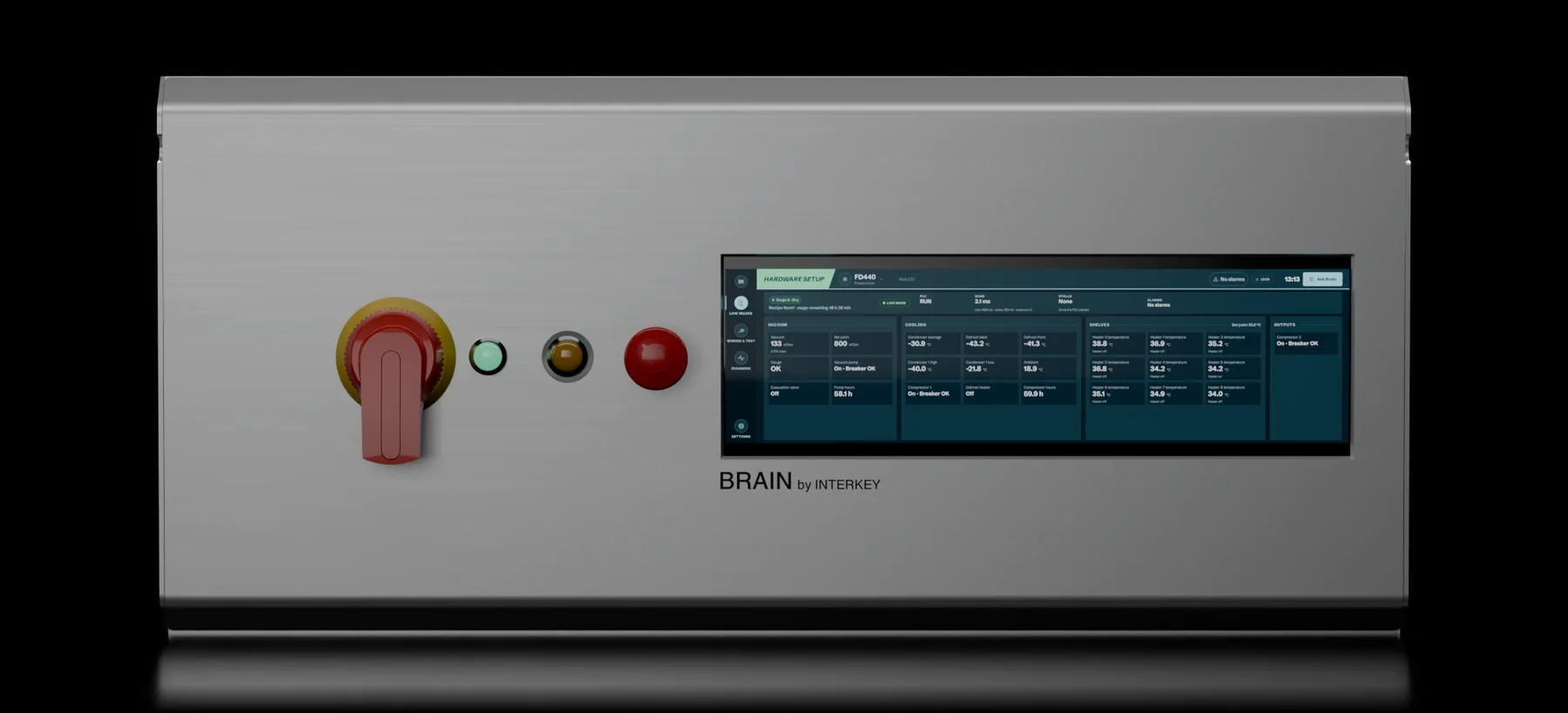
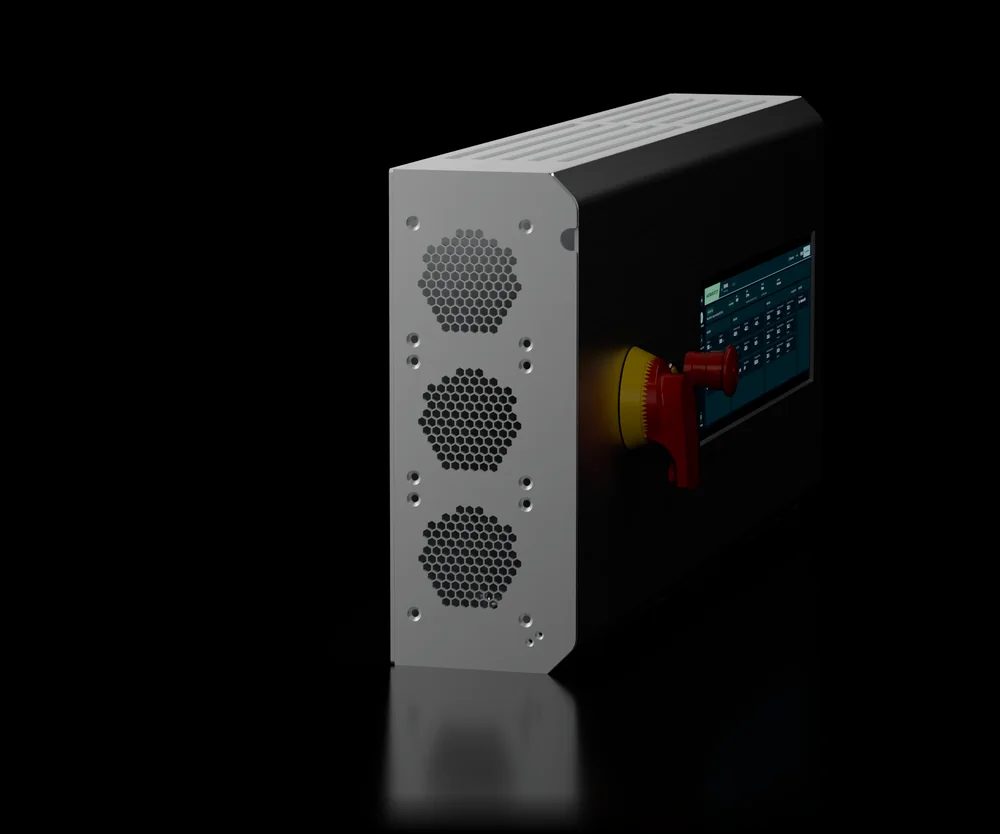
Main controller
Runs your control program, screens and history on Linux
- CPU
- 4 × ARM Cortex-A53NXP i.MX 8M Plus, CompuLab SBC-IOT
- RT
- 1 × ARM Cortex-M7Real-time core, runs apart from Linux
- OS
- Debian Linux
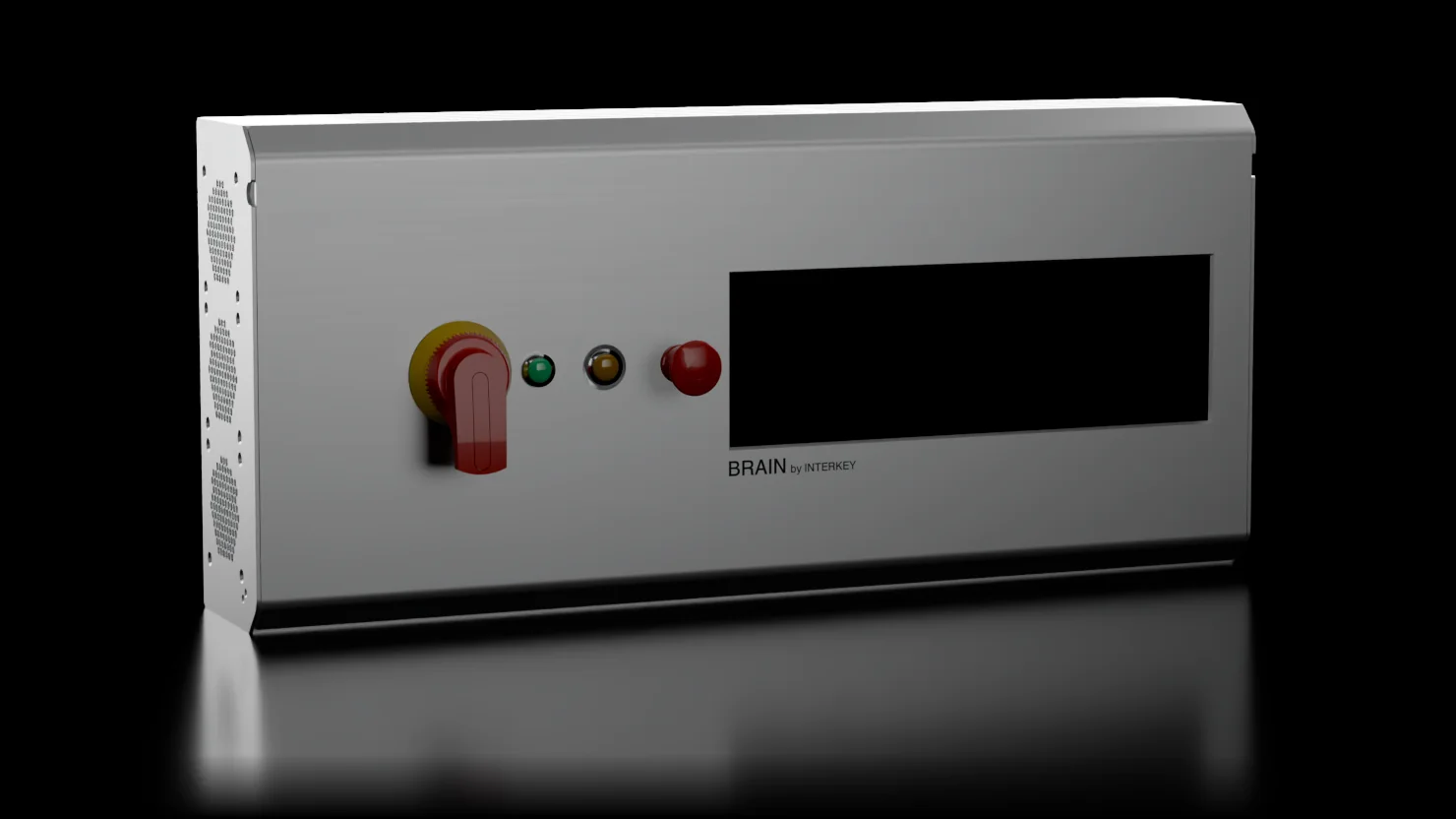
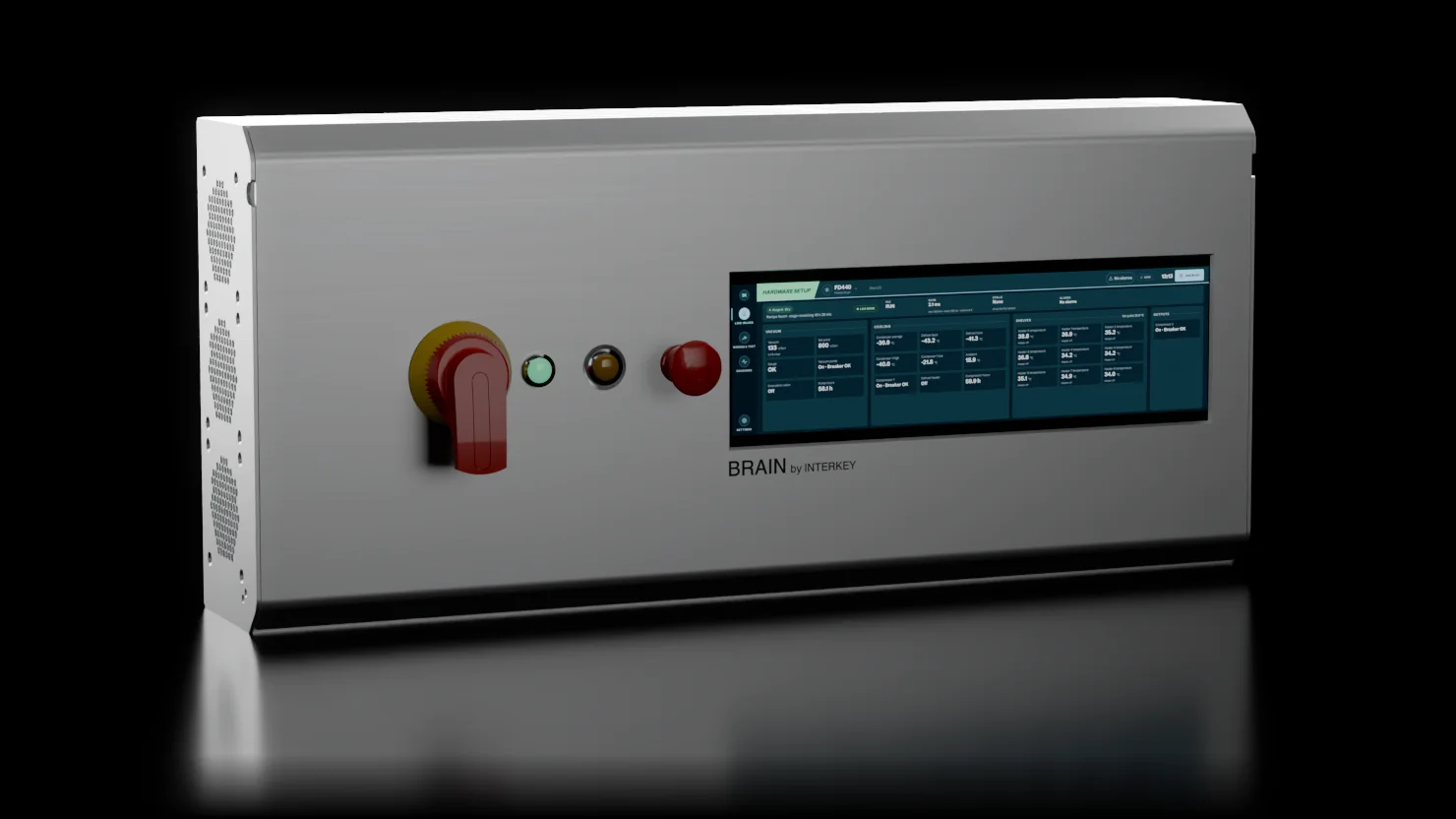
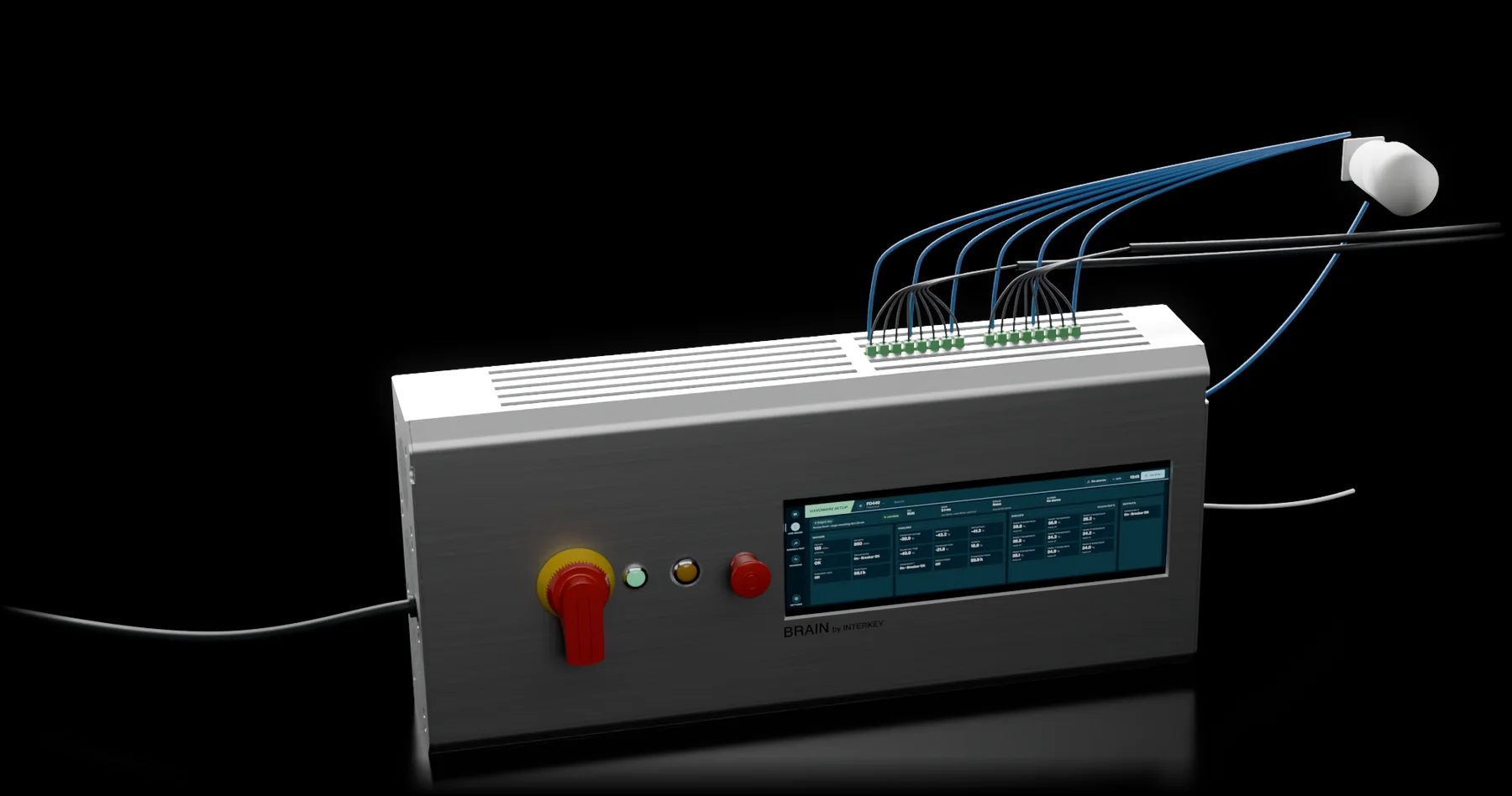
The whole control cabinet in one box. Three-phase wiring, I/O, touchscreen and a local AI computer, with every chip open to reprogram.
Pre-order now From €1,980 excl. VAT. Tech specs >>For machine builders making small and medium series. A usual control cabinet starts with a parts list and ends with days of wiring. With Brain, you connect your machine and start.
Temperature inputs: single-unit shop prices excl. VAT, checked November 2026. Your price may differ. Wiring share: ISW, University of Stuttgart study, as reported by EPLAN.
The same box runs a single machine, a greenhouse or a factory line. You connect what you have, and it becomes one system.
One controller for every machine you ship: control, screen and history in one box, with no cabinet to build.
Climate, irrigation and light from one box. Cameras watch the crop, and what they see becomes a value your program can use.
Replace an old controller, or add sensors and cameras to a line. Modbus, MQTT and EtherCAT are on board.
Anything with sensors, valves and motors: buildings, labs, water. Say what it should do, or program it yourself.
Most PLCs are sealed. Brain is open to reprogram, so you choose how far you go. The wiring, the isolation and the mains side are already done for you.
We will release an SDK, so you or your AI agent can reprogram every layer.
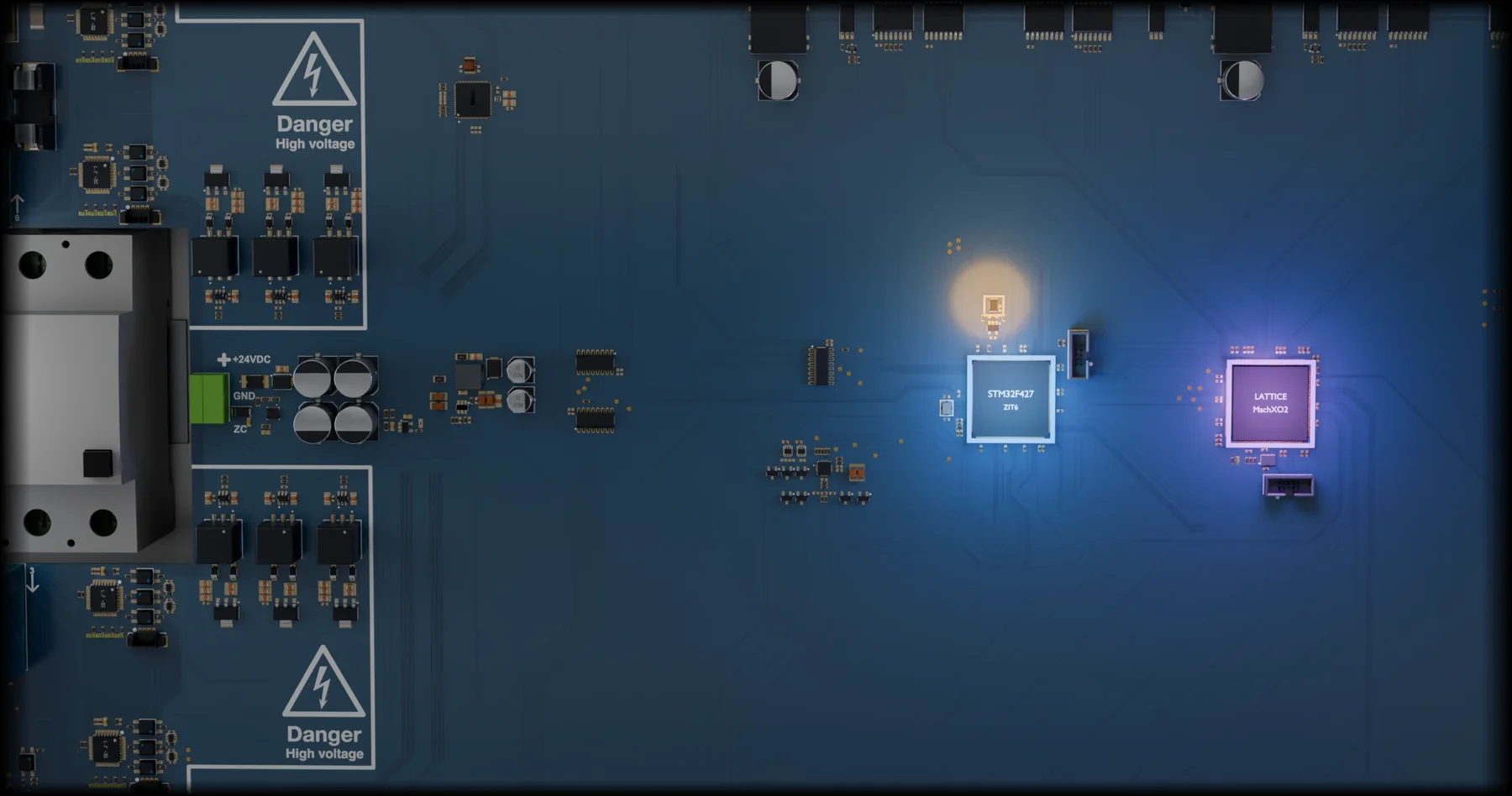
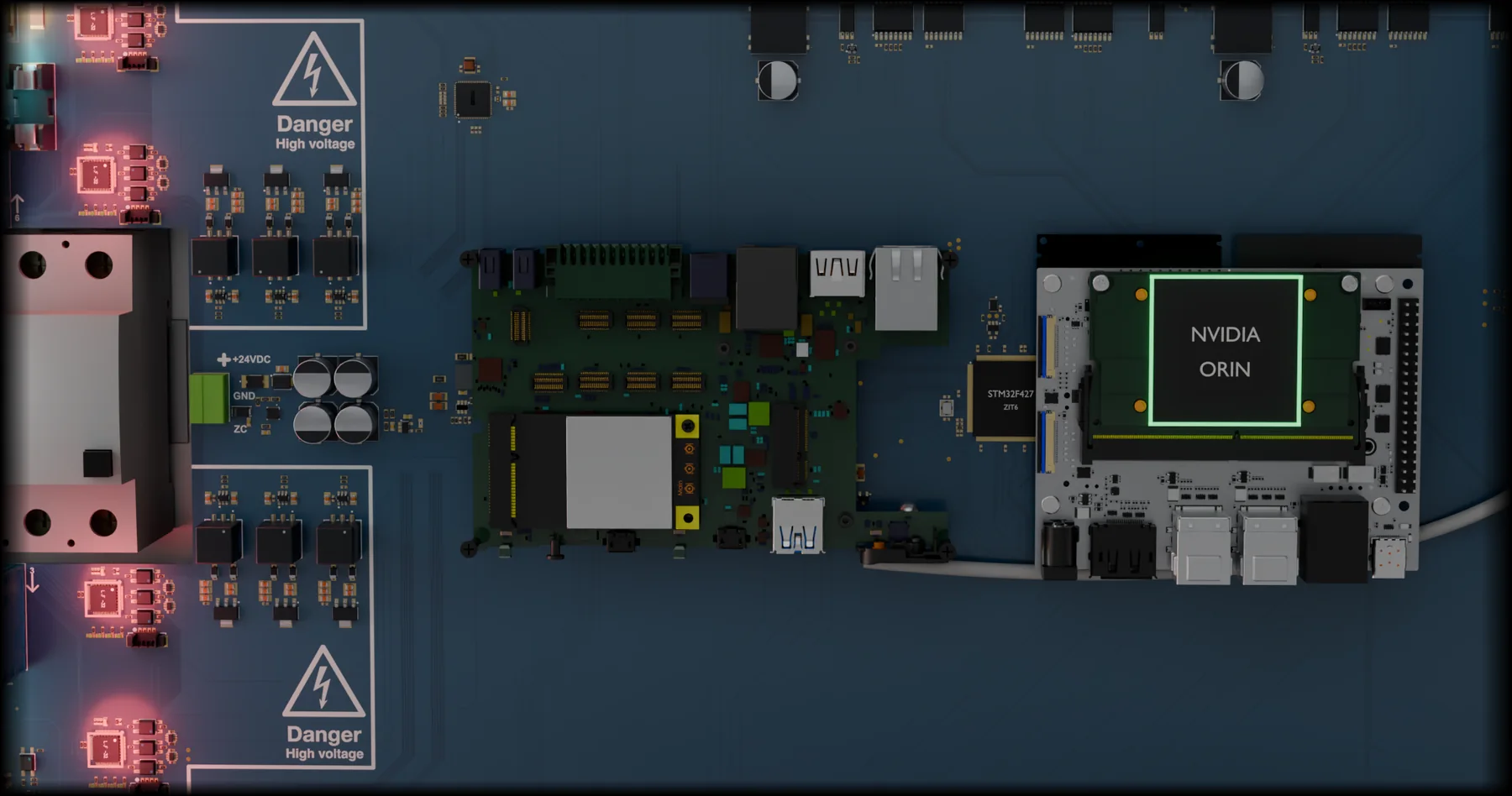
Independent processors work in parallel, each in charge of its own part of the machine. The control program keeps its timing when the AI is busy, and every mains output keeps watching itself while everything else restarts.
Runs your control program, screens and history on Linux
The Linux side runs your program and screens. Its Cortex-M7 core runs apart from Linux and watches the program.
Runs vision models on your own cameras, on the box
Heavy vision work never competes with the control program. It also watches the rest of the Brain from outside.
Reads and writes every channel, with its own watchdog and a logic chip for fast signals
Keeps every channel alive and carries out the safe state on its own if the Brain goes quiet.
One processor per mains output, on the mains side of the isolation
Each one looks after one mains output and nothing else.
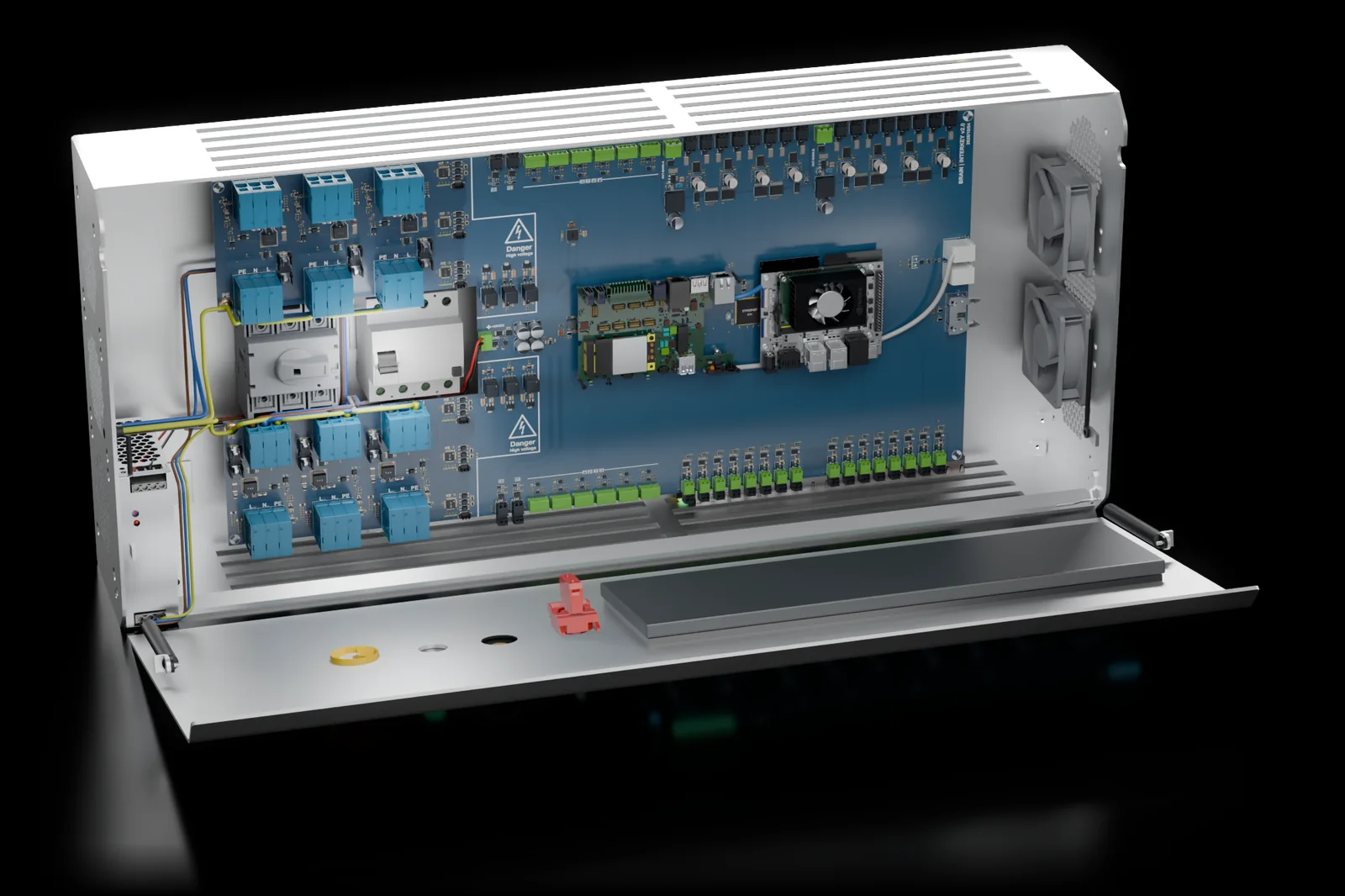
The whole front folds down on gas struts. Everything inside faces you.
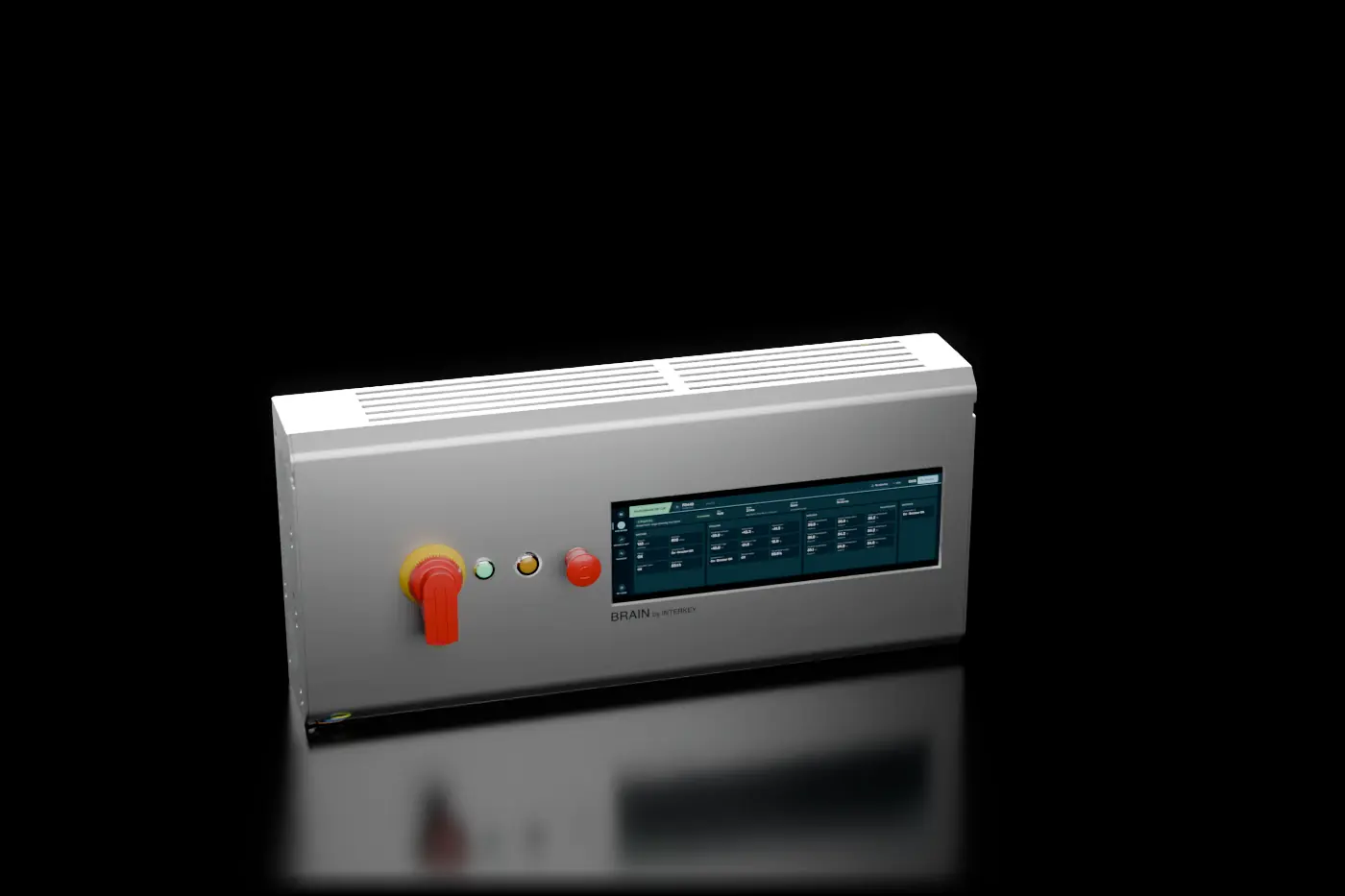
A control cabinet usually starts as an empty box and a wiring diagram. Brain arrives finished. Bring one three-phase cable and the wires to your machine.
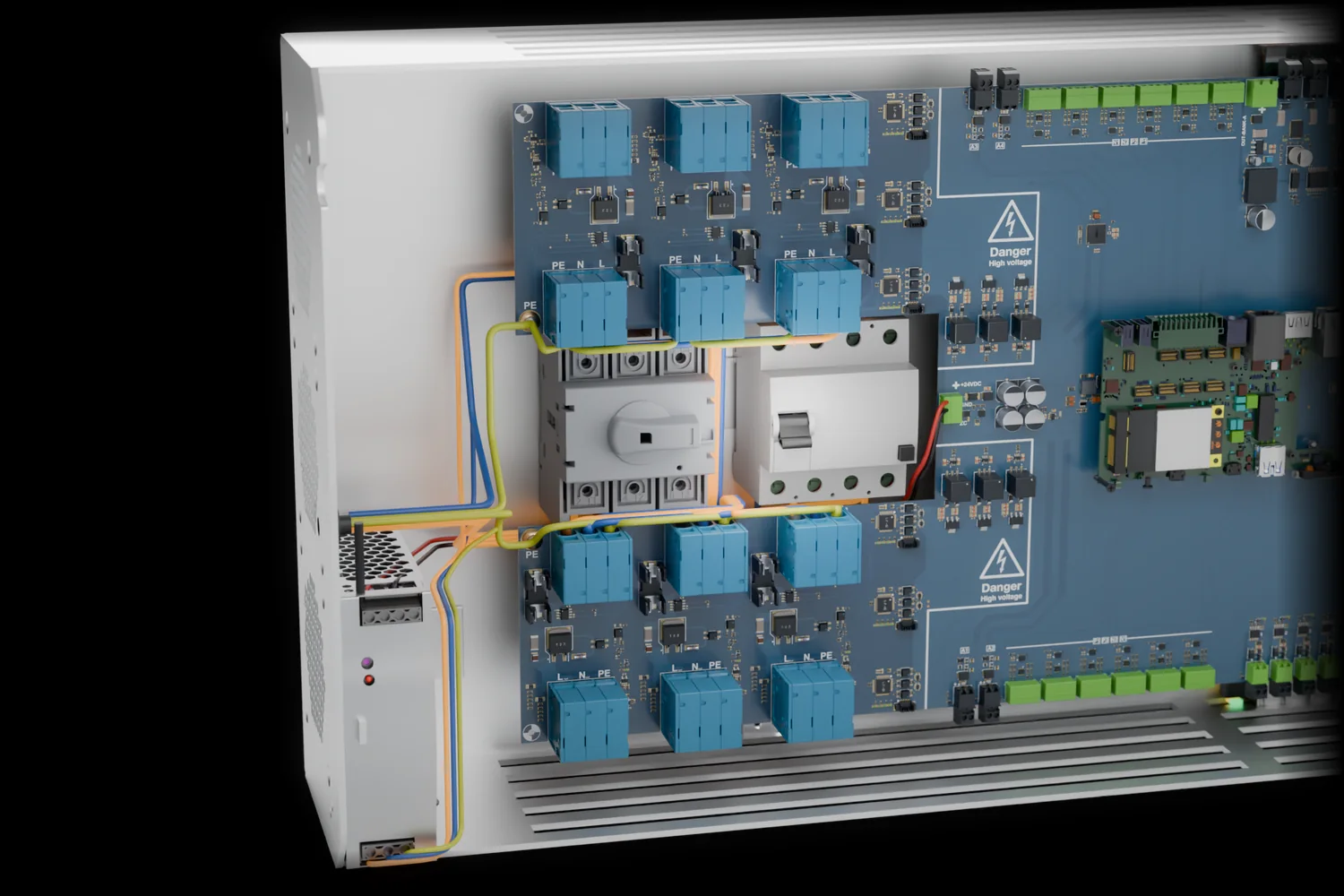
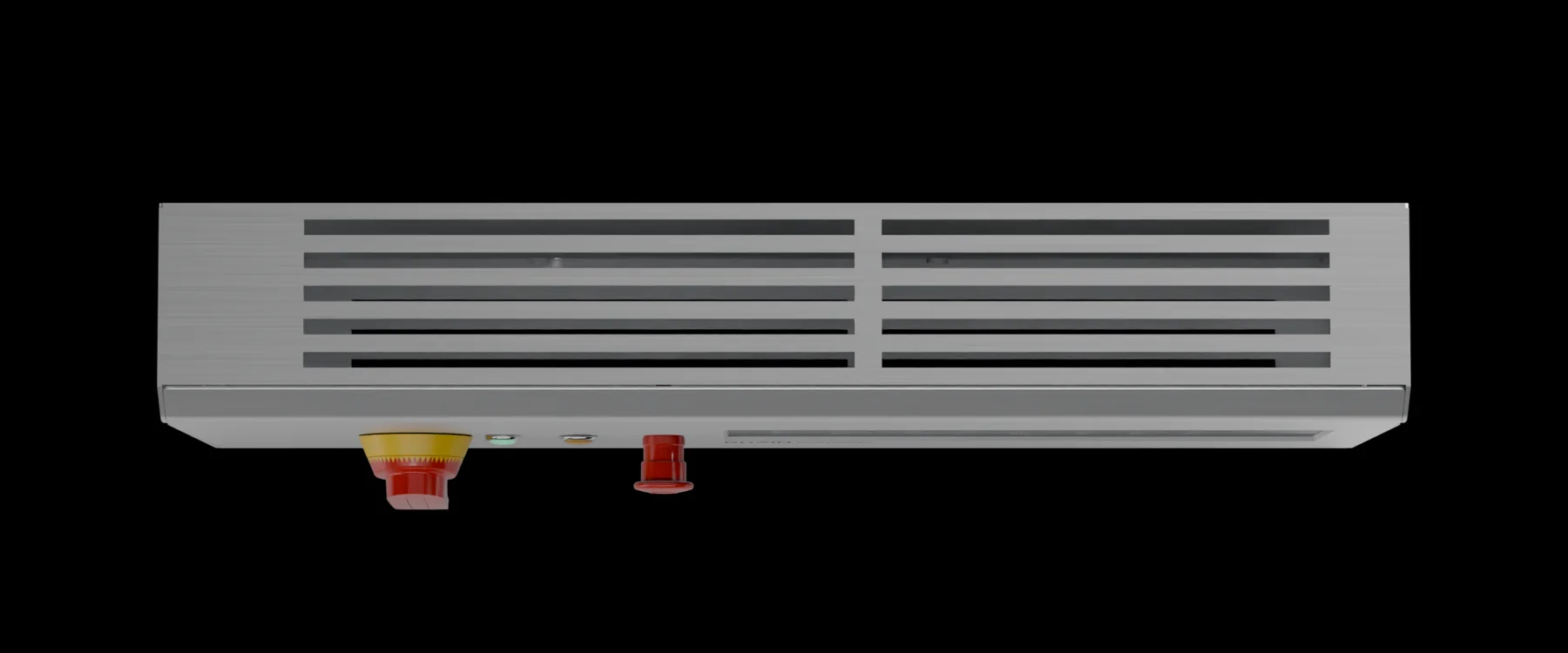
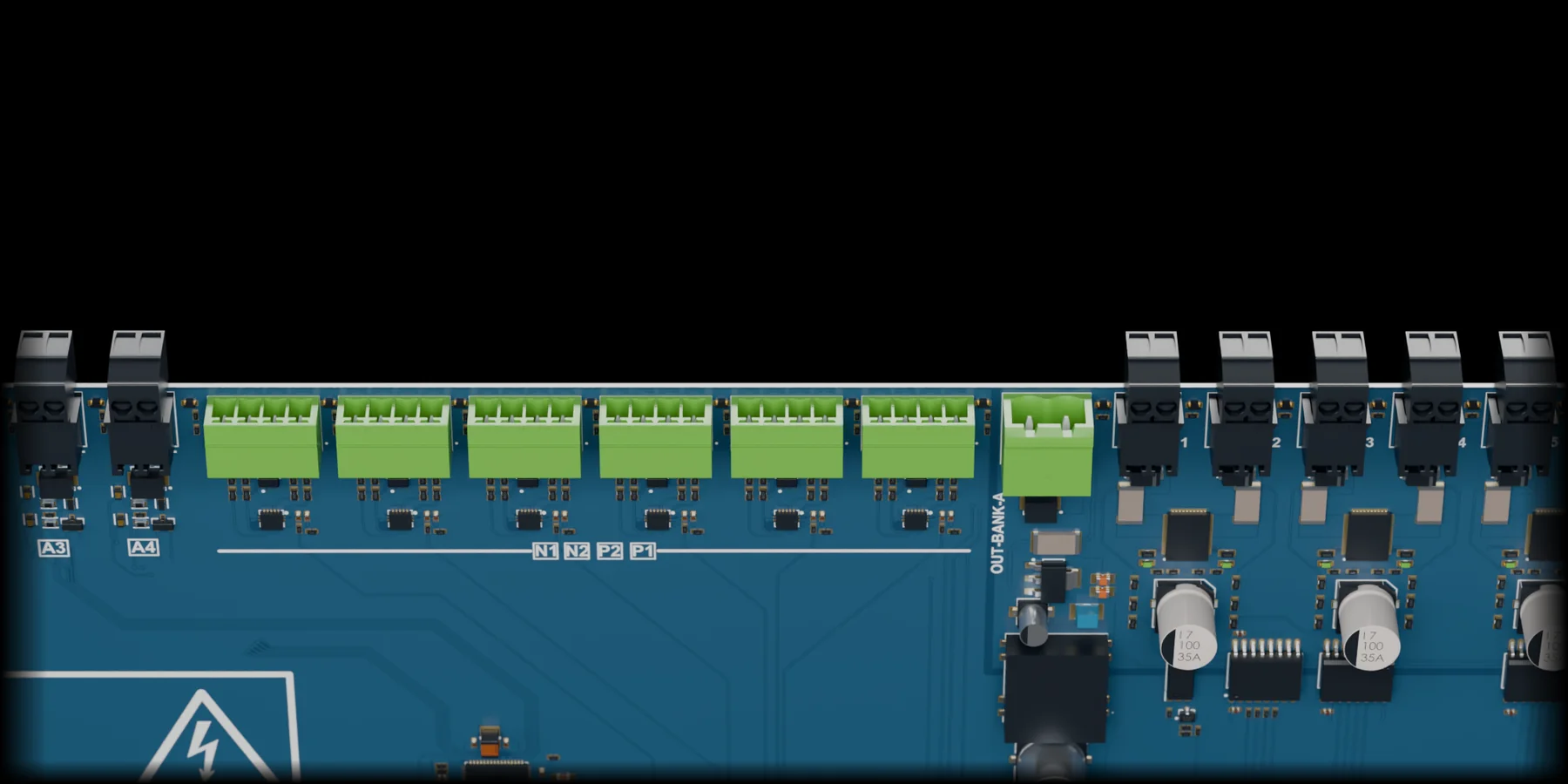
Signals plug in through the slots along the top and bottom. Cameras take power and picture from one cable. More boards chain on over one link.
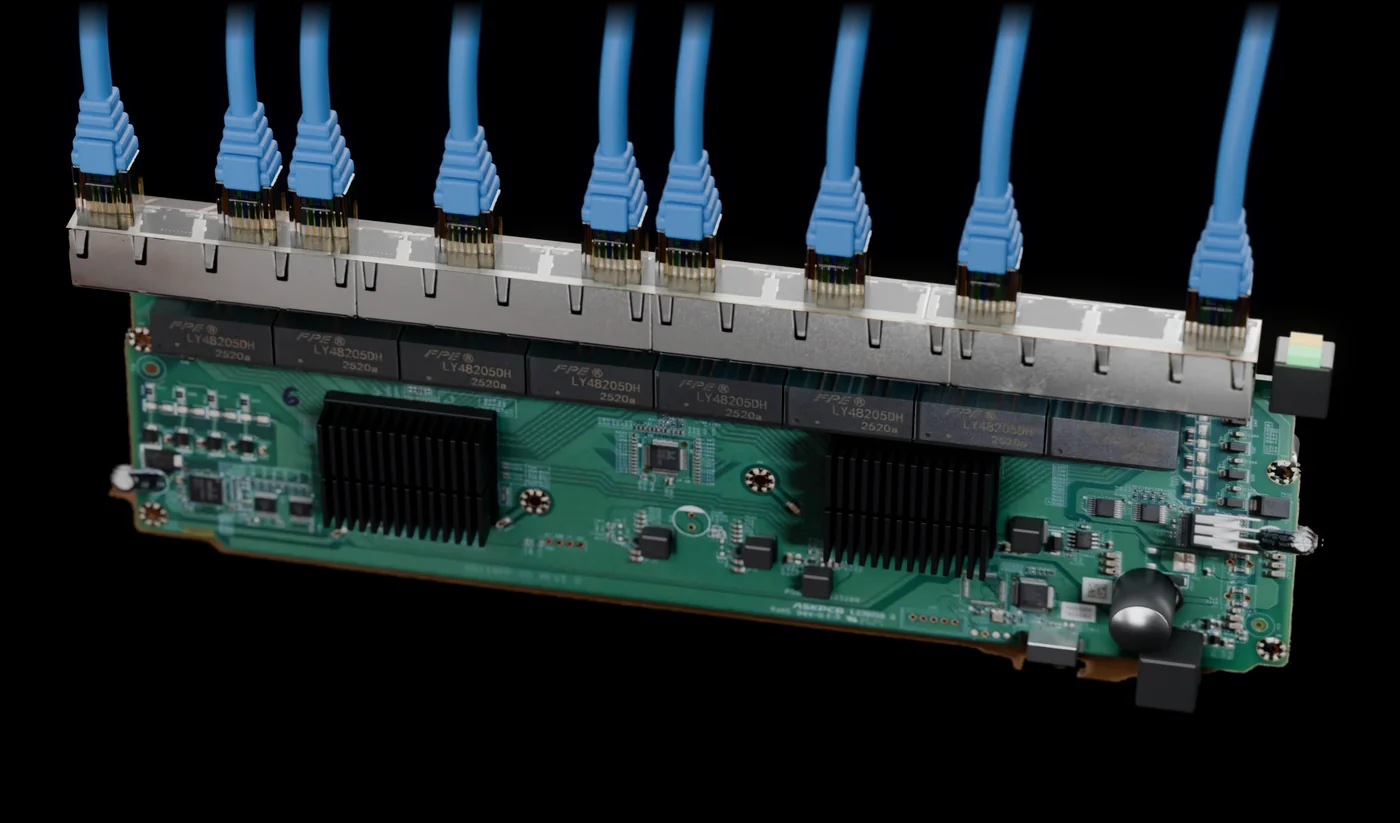
Two 16-port PoE+ switches sit inside the cabinet as bare boards, with their ports facing outward through the slots along the top and bottom. One network cable brings power and data to everything around your machine.
2 × Netgear GS116LP, Gigabit, PoE+
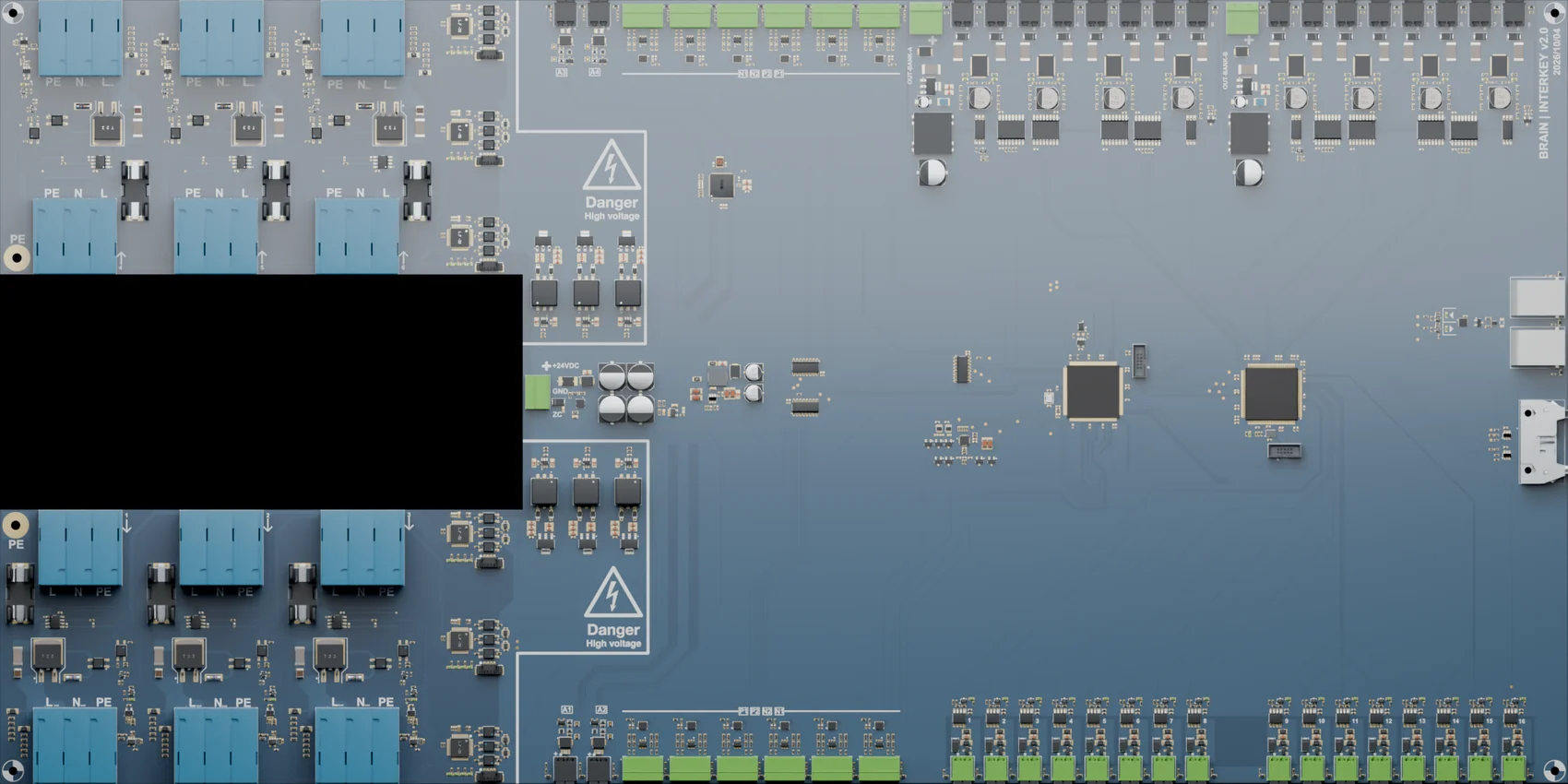
The real v2 board, with every connector where it really sits. Pick a group, then tap a connector to see its pins.
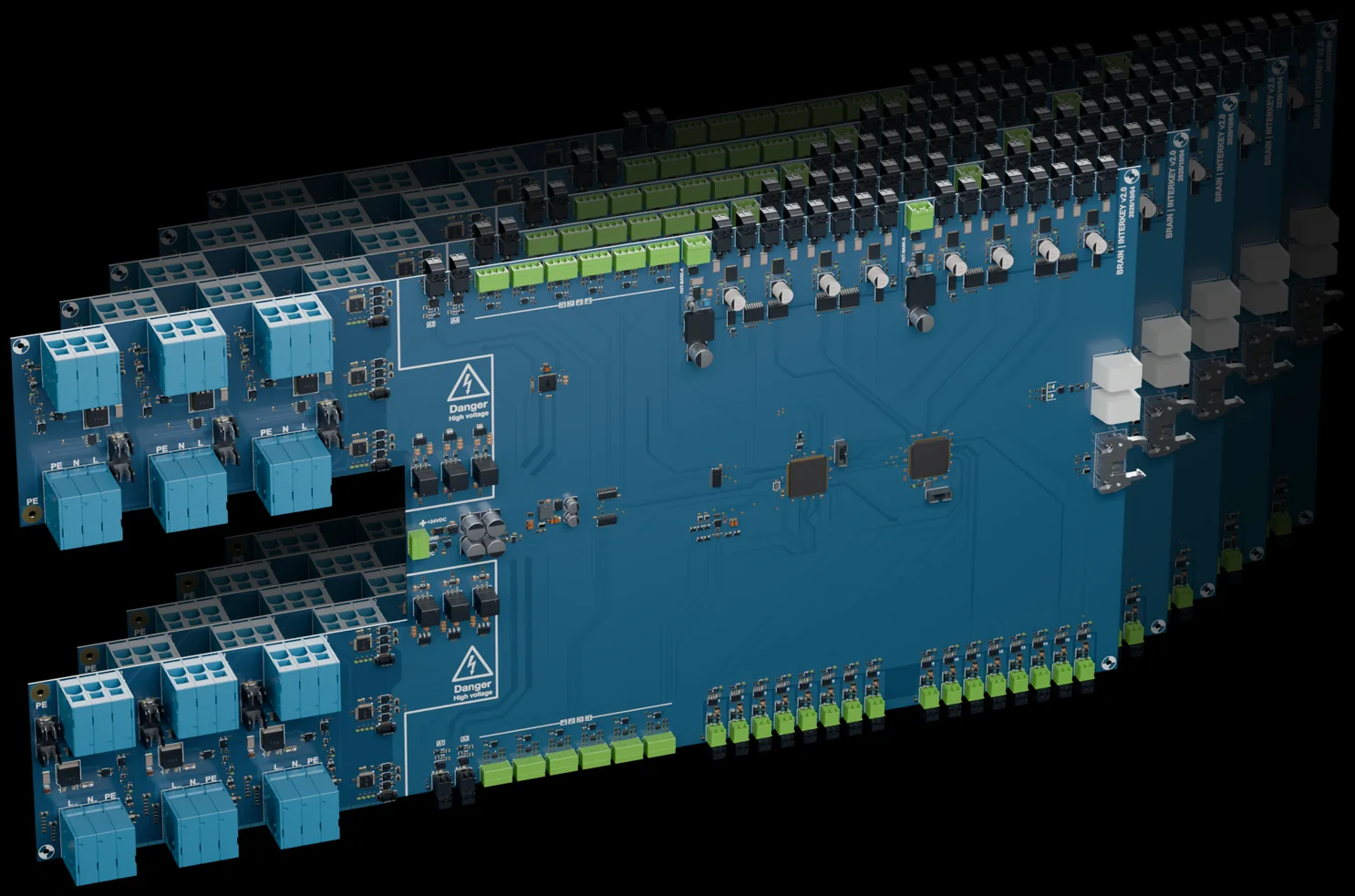
Need more channels? Stack up to five boards and chain them onto the link. Your program sees one machine.
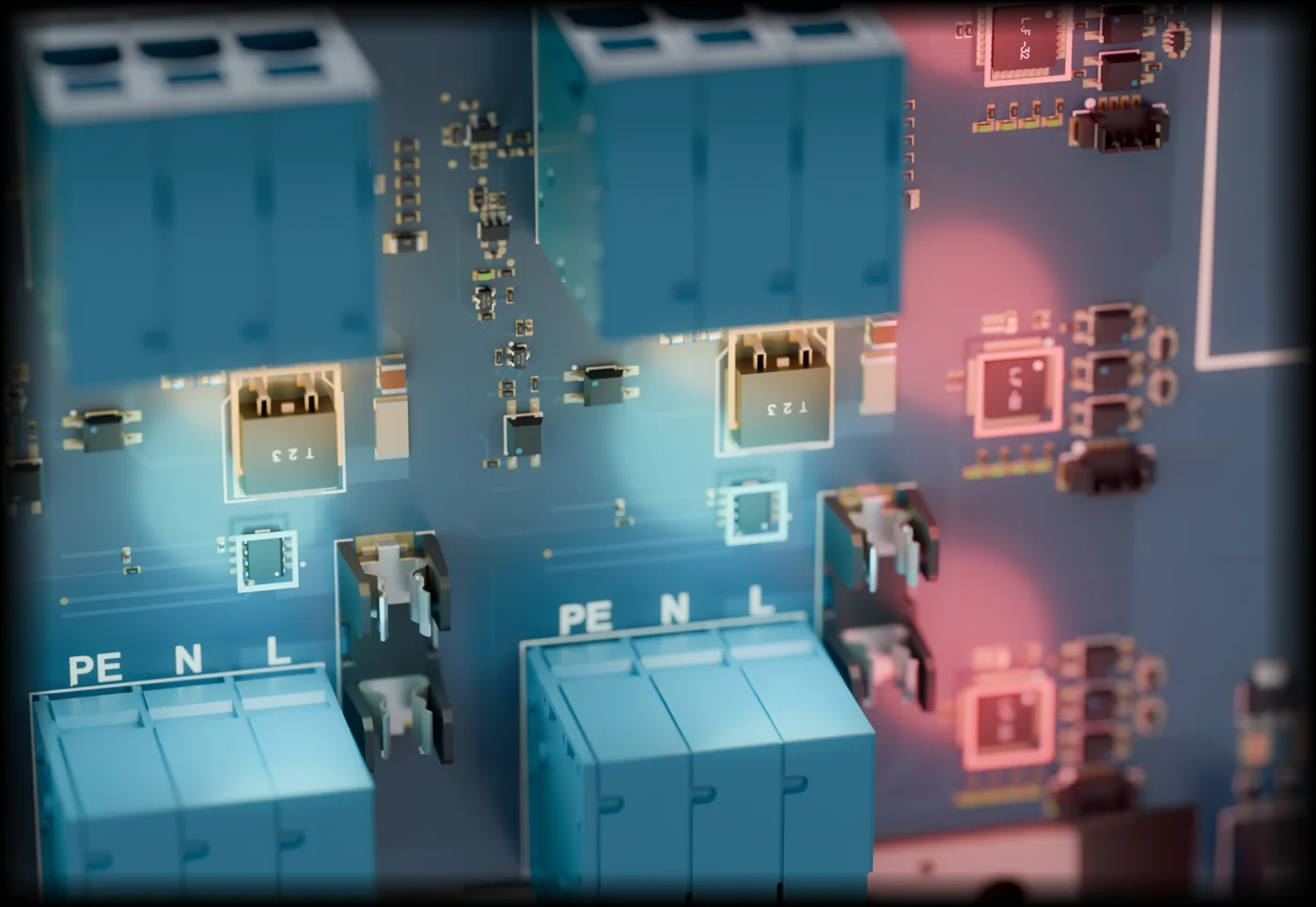
Each mains output has its own small computer on the mains side, separated from everything else by isolation.
No single chip is trusted. Each layer watches the one above it and acts by itself, so a crash at any level has a known result.
A heater left on can burn a batch. A vacuum pump that stops at the wrong moment can ruin one. You decide what each output does if the program dies.
Measured on a real FD440 freeze dryer by killing the control program: the outputs changed 1.1 s later. Read at the output board with mains disconnected.
Brain's software is the fast way to run a machine, and it is optional. If your engineers want full control, the hardware is theirs: every layer below can be reprogrammed.
Structured Text, Ladder and FBD, or plain language.
i.MX 8M Plus · A53An ordinary Debian computer. Your services, your protocols, your own screen.
i.MX 8M Plus · A53Your own hard real-time code, running apart from Linux.
i.MX 8M Plus · M7Flash your own firmware to the I/O board over RS-485.
STM32F427Your own counters and fast signal logic in Verilog.
Lattice MachXO2Train and run your own vision models on the box.
NVIDIA Jetson# The I/O board speaks plain Modbus RTU. No SDK needed. from pymodbus.client import ModbusSerialClient board = ModbusSerialClient("/dev/ttymxc0", baudrate=115200) board.connect() temps = board.read_holding_registers(0, count=24, device_id=1) # 12 RTD inputs, 32-bit floats board.write_register(0x0101, 0b0001, device_id=1) # first output on
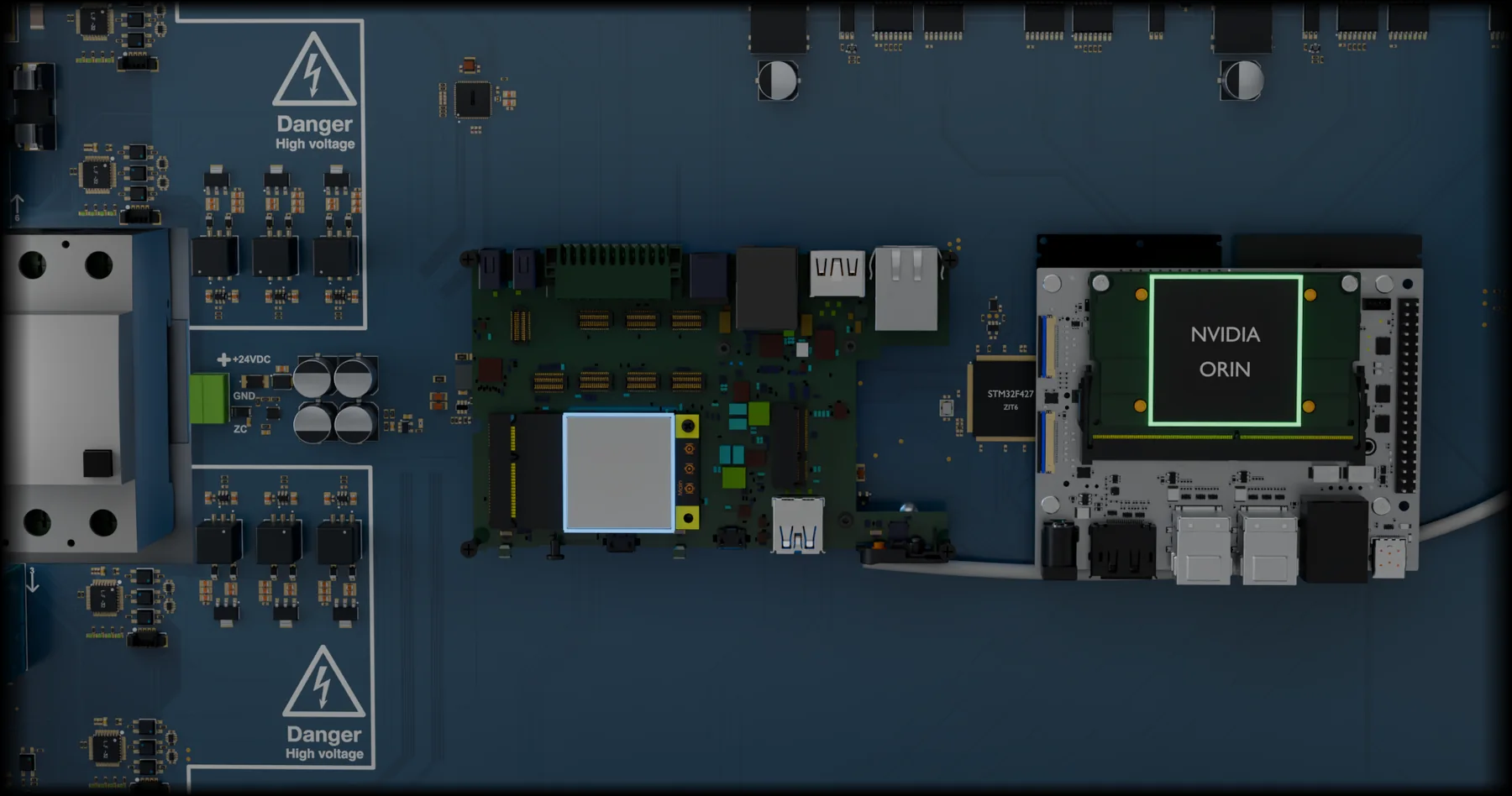
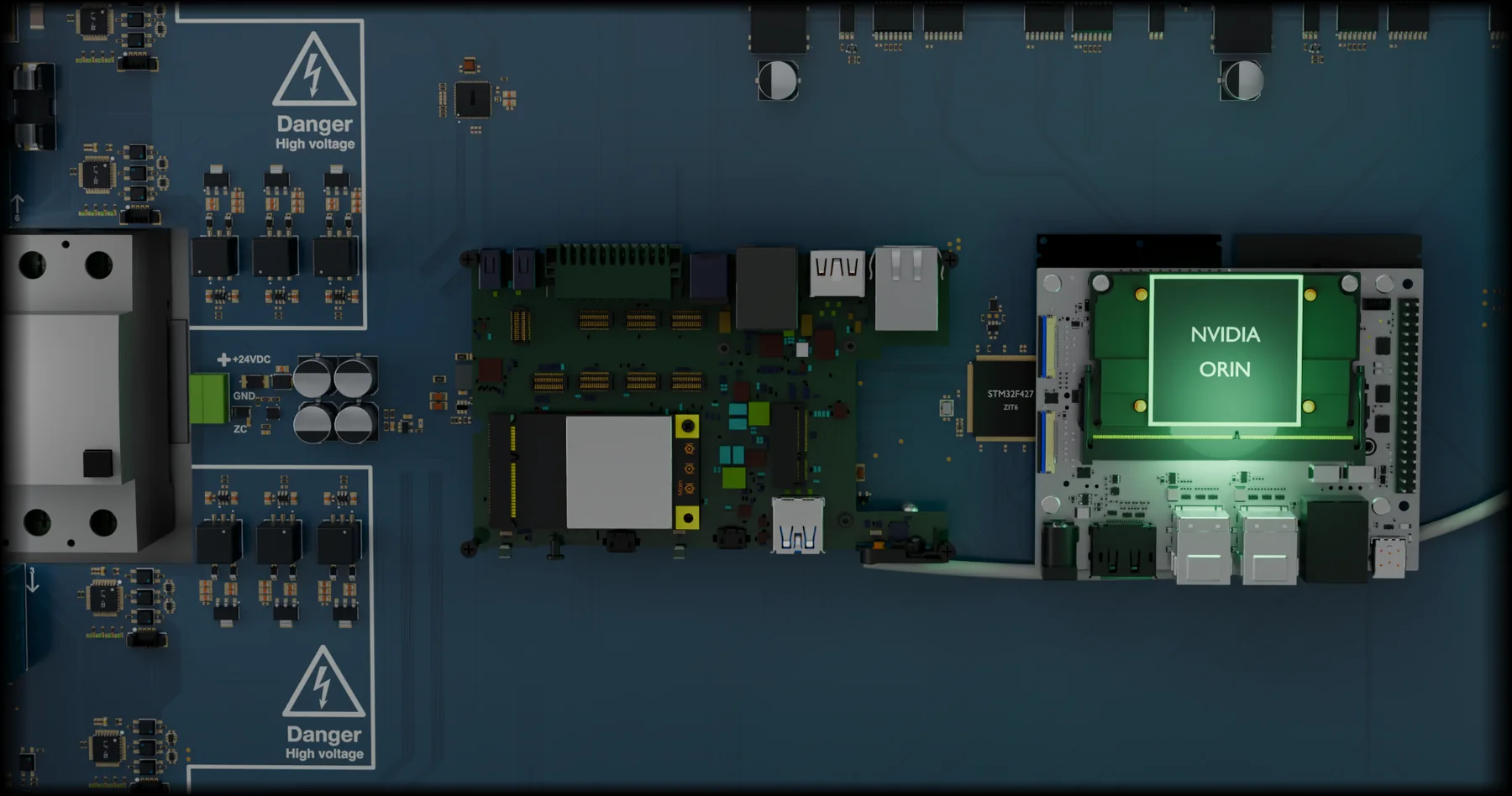
Lift the heatsink and there it is: an NVIDIA Orin, right next to the controller. Cameras plug in over PoE, and the vision models run here, on pictures of your machine.
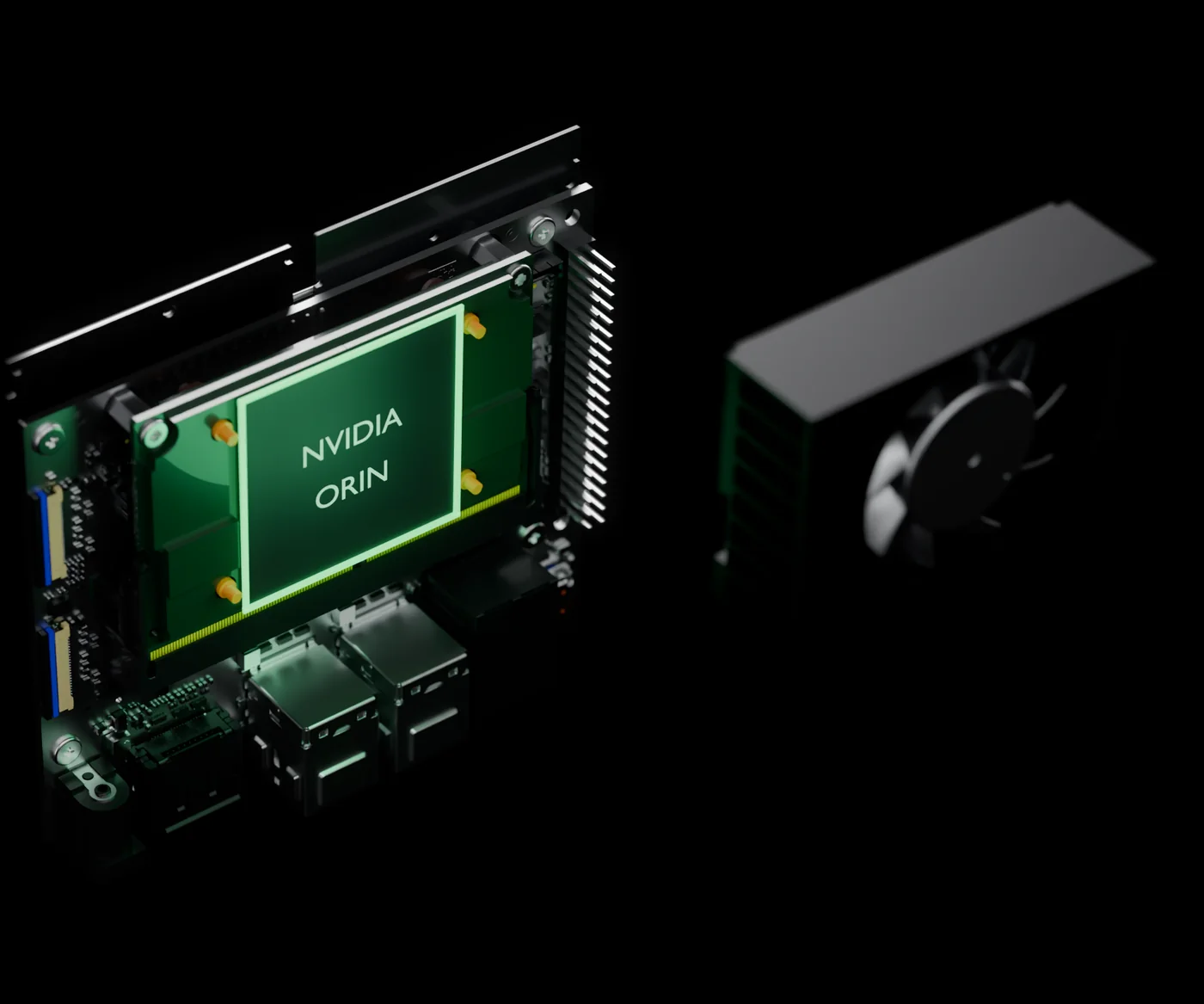
On the box, on your machine's own pictures
AI models live in memory. More memory means bigger models, and more of them running side by side, all on the box next to your machine.
Have another AI computer in mind? We can fit a similar one.
Brain tells you. Its screen names the signal and points at the exact terminal. Plug the wire in: that channel's LED lights, then turns green once Brain reads the signal. Outputs get a 1.5 s Pulse, so you see whether the right thing moved. Try it.
A simulation of Brain's setup screen. On the box the channels are read for real: sensor values on inputs, the output's own feedback on outputs.
16.2 inches and 2608 × 720 pixels in the front of the box. Every value of the machine fits on it at once.
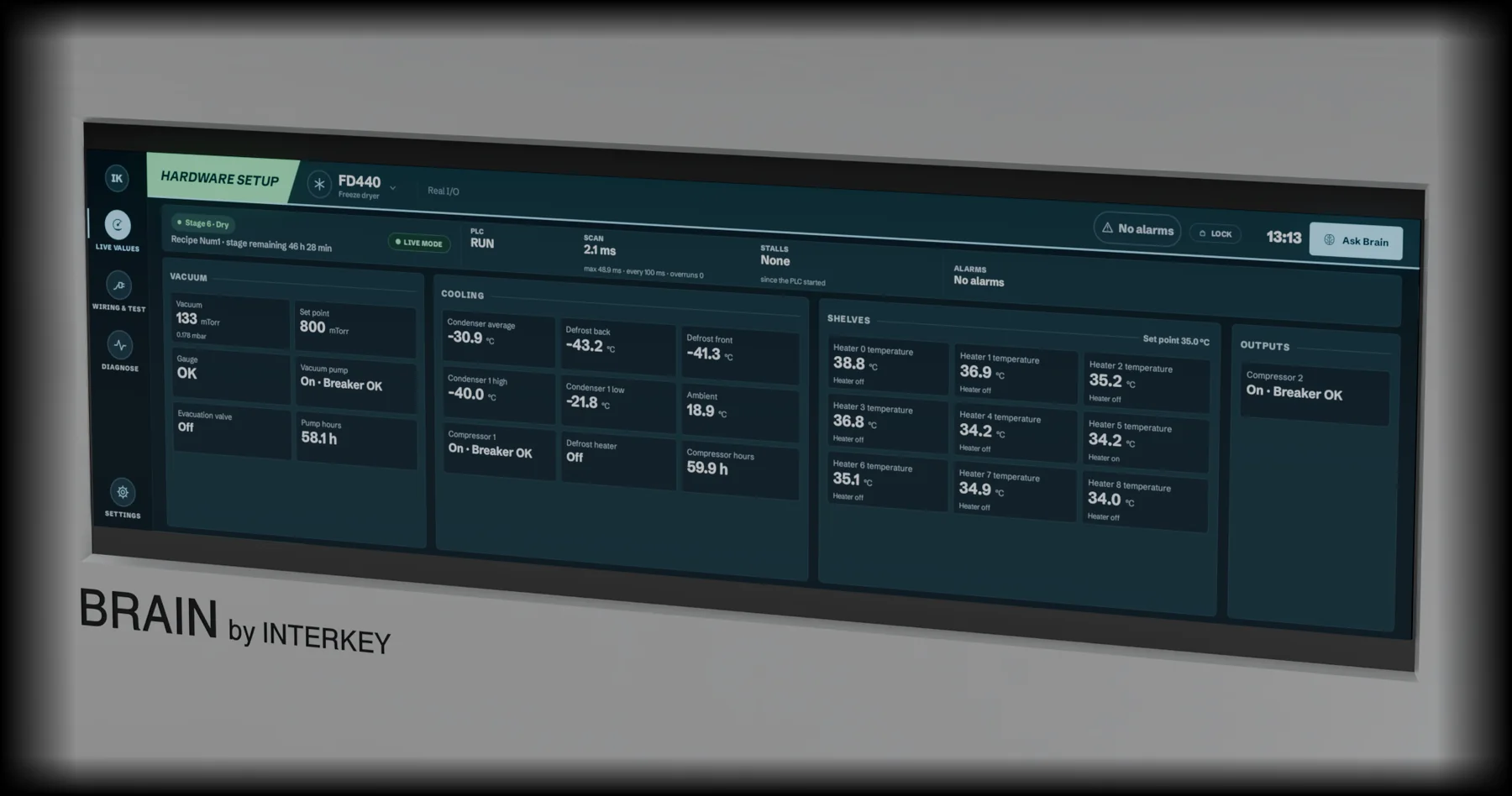
Your operators get a screen built around your machine: what is happening, how long it will take, and the button they need.
Real Brain software on a real FD440 freeze dryer: six hours of a recorded batch in 16 seconds.
Brain writes the control logic with cloud AI models, builds the screen and runs it.
Brain records every run on the box. The longer it works, the better it knows what normal looks like, and with your OK, every machine of the same type learns from the others.
Every run is recorded on the box. Brain compares each run with your machine's own normal and tells you when something drifts.
Sharing stays off unless you turn it on. You decide what leaves the box, and you can turn it off again.
As machines of a type share data, that type gets its own model. A new freeze dryer will start out knowing freeze dryers.
WAVE builds commercial freeze dryers in Vienna for food, pharma and industry. From 2027, Brain is the controller in all of these machines.
Count what you want to connect. Brain works out how many I/O boards you need. Everything else is already in the box: screen, main switch, RCD, power supply, AI computer and 32 PoE ports. Need more AI memory? Pick a larger AI computer.
Each extra I/O board adds €500 excl. VAT. Using thermocouples? Connect them through a 4–20 mA transmitter.